Choosing the right equipment starts with the profile, door size, coating system and required output—not the advertised machine name. By the end, you will be able to map the sublimation sequence, compare vacuum and continuous configurations, and check whether a machine will fit your Mumbai factory’s space, utilities and production targets.
Key takeaways
- Use a sublimation base powder formulated for wood-effect transfer.
- Match vacuum, sleeving or large-area equipment to profile geometry.
- Specify heating, vacuum and dwell conditions before approving a machine.
- Test film tension and corner coverage on your longest production profiles.
How aluminium profile sublimation creates the wood-effect finish
A profile does not become wood-like because hot air passes over printed film. The aluminium must first receive a specially formulated sublimation base powder; ordinary exterior powder is not automatically suitable.
The conversion follows this order:
- Cut and clean the profile, then complete pretreatment so the powder can bond consistently.
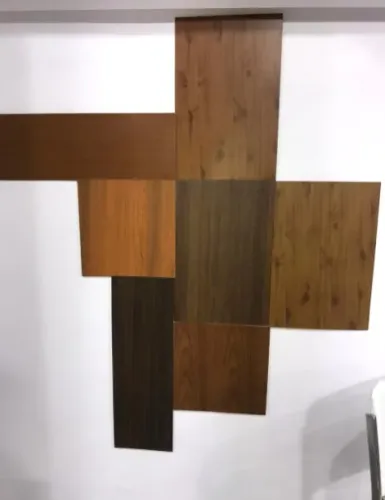
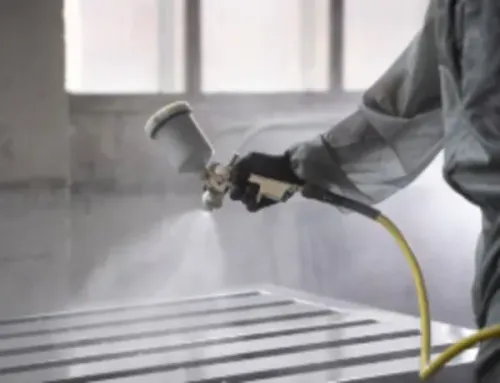
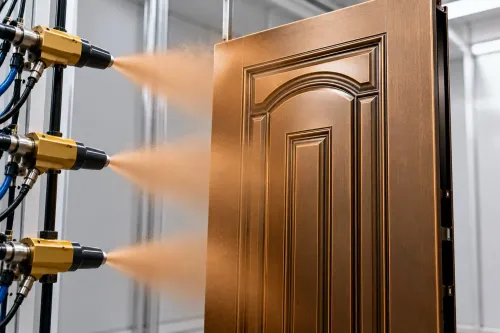
- Apply the base powder and cure it. The base colour combines optically with the transferred ink, so it affects the final wood shade.
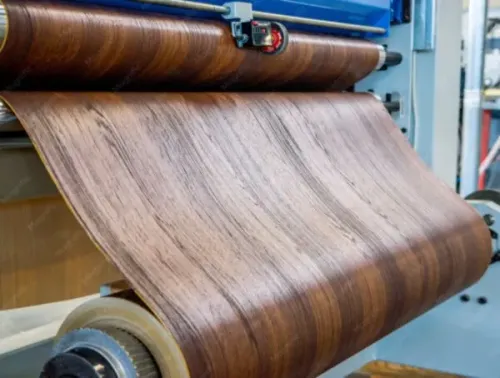
- Cool the coated profile before wrapping it in printed transfer film. Seal the film tightly; use vacuum where the machine and profile geometry require it.
- Heat the wrapped assembly until the aluminium itself reaches the specified transfer temperature for the required dwell time. The ink changes into gas and penetrates the coating.
- Cool the profile, remove the film and inspect the grain, corners, edges, colour and surface for voids or wrinkles.
The oven inlet reading is not enough. Wall thickness, cross-section, hanging density and airflow can leave the metal colder or hotter than the surrounding air, producing weak transfer or colour variation.
For aluminium profile sublimation for machine in Mumbai, specify the complete powder, film and transfer process rather than judging the machine alone. For exterior architectural work, ask for qualification of the complete system against the project’s required standard, such as QUALICOAT and QUALIDECO or AAMA 2604/2605.
Vacuum, sleeving or large-area equipment: match the machine to the part
Long profiles need a continuous sleeving or wrapping line when you run repeat profile families at high volume. A vacuum-bag or vacuum-membrane system suits irregular sections, short runs and oversized parts, but leaks, film sealing and loading discipline directly affect results.
| Option | Best match | Main limitation |
|---|---|---|
| Continuous sleeving or wrapping line | Long, straight aluminium extrusions with repeatable cross-sections | Less flexible for changing shapes; profile length alone does not prove chamber fit |
| Vacuum-bag or vacuum-membrane system | Irregular sections, short profiles and large individual components | Slower loading and greater sensitivity to leaks, wrinkles and poor sealing |
| Large-area vacuum press or chamber | Flat panels and door leaves | Requires a usable heated area larger than the complete leaf, including film and sealing margins |
| Component processing before assembly | Door frames, leaves and narrow extrusions | Hinges, locks, gaskets, seals, adhesives and thermal breaks can be damaged by transfer heat |
A wood finish sublimation machine aluminium line must be specified by usable working dimensions, not its advertised maximum length. Confirm maximum profile length, diagonal, cross-sectional envelope, profiles per load, chamber dimensions, heating method, temperature uniformity and extraction capacity.
For a sublimation machine for metal doors in Mumbai, process the compatible metal leaf and frame components before assembly. A profile machine that accepts a two-metre extrusion does not automatically accept a complete door leaf: check the panel’s width, height, thickness, loading clearance and heated area.
Loose components also make masking, cooling and finish inspection more reliable.
The production sequence and process conditions to specify
Specify the sequence as cut and prepare, base-coat and cure, cool, wrap, seal, heat-transfer, cool again and inspect. An aluminium profile coating machine must control each hand-off; a correct oven temperature cannot rescue damp film, an under-cured powder coat or a profile loaded beyond its airflow capacity.
| Stage | Operation | Conditions to record |
|---|---|---|
| Before transfer | Cut, deburr, clean and pretreat; apply sublimation-grade base powder | Powder formulation, colour, cure temperature, metal temperature, cure time, film and powder lot numbers |
| During transfer | Condition film, sleeve or wrap the cooled profile, seal it and apply vacuum where the equipment requires it | Aluminium metal temperature, dwell time, chamber temperature, vacuum level, profile spacing and airflow |
| After transfer | Cool the profile before removing film, then inspect and release it | Part temperature at film removal, colour, gloss, adhesion, edge coverage and image alignment |
- Measure the aluminium itself with contact probes or validated data logging. Air at the oven inlet does not prove that thick walls, enclosed sections or densely hung profiles reached the target.
- Use 180–200 °C metal temperature for several minutes only as a starting window. Establish the final setpoint and dwell from the powder, film, wall thickness and geometry; excess heat can alter gloss or coating performance.
- Keep powder and transfer film sealed and dry in Mumbai’s humid or monsoon conditions. Condition film to the production area before sealing, because condensation disrupts film handling and transfer.
- Confirm the base-coat colour with a trial profile. The final shade combines that powder colour with the printed ink, so a film reference alone is not a finished-colour guarantee.
Film handling for long profiles, corners and door components
Film preparation, not vacuum strength, prevents wrinkles, trapped air and incomplete transfer on long profiles. Use a wood finish sublimation machine for aluminium only after checking that the film matches the profile length, section and grain direction.
- Unroll film on a clean, flat surface and remove creases before wrapping.
- Align the printed grain with the profile’s visible face; mark a reference line so the pattern cannot rotate around corners.
- Allow enough slack for the film to settle into recesses, but remove loose folds that become permanent wrinkles.
- Overlap film edges evenly and keep the overlap away from the main sightline.
- Seal every end completely. A leak at an end seal draws air through the wrap and creates white spots or cloudy patches.
- Press film into corners without bridging across a sharp radius; bridging leaves an untransferred strip beside the edge.
- For door components, support stile, rail and corner sections so the film does not shift during loading.
Inspect the wrapped assembly before heating. Look for bubbles, open seams, stretched grain and contact between adjacent film layers; vacuum will not repair any of them.
Keep the powder colour, film lot, cure history, aluminium temperature and dwell time consistent across the batch, because the base coat combines optically with the printed ink and changes the final shade. Apply the same loading density and profile orientation on every cycle.
How to test machine fit for a Mumbai production line
Do not approve an aluminium profile coating machine from its advertised length alone. Confirm the maximum profile length, diagonal, cross-sectional envelope, profiles per load, usable oven or chamber dimensions, loading method, cycle time and actual metal-temperature uniformity. A long chamber cannot prove it will process a complete door leaf.
| Option | What to verify | When it applies |
|---|---|---|
| Profile line | Longest extrusion, section envelope, hanging density, airflow, heating capacity and extraction volume | Frames, rails and narrow profiles |
| Flat-panel system | Usable heated area, door-leaf diagonal, clamping or sealing method and temperature variation across the panel | A sublimation machine for metal doors in Mumbai |
| Flexible or mixed line | Changeover time, tooling for irregular sections, maximum assembled-part dimensions and separate recipe control | Different profiles and door components on one line |
Before buying, request these records and checks:
- Electrical load, phase, cable rating, ventilation, heat-rejection route and compressed-air requirement; allow for Mumbai humidity and monsoon moisture.
- Maintenance clearances around heaters, fans, seals and extraction points, plus spare-part lead times, cleaning access and fault diagnostics.
- A witnessed trial using your powder, transfer film, profile alloy, wall thickness and largest door component. Measure aluminium temperature and dwell time at several points, not inlet air temperature alone.
- A written acceptance report covering throughput, colour consistency, adhesion and exposure qualification. For exterior work, ask whether the complete powder-and-film system meets the specified QUALICOAT/QUALIDECO or AAMA 2604/2605 requirement.
Ask AMECO World of Coatings to state these figures in the quotation, including film and powder storage conditions, rather than accepting “weatherproof” or “high capacity” as evidence.
Related products
 | Vacuum Sublimation Machine For Aluminium And Metal Vacuum Sublimation Machine For Aluminium And Metal Doors Vacuum Sublimation Machine For Aluminium And Metal Doors View product → |
 | Wood Finish Coating Sublimation Machine For Alumin Wood Finish Coating Sublimation Machine For Aluminium and Metal Doors Wood Finish Coating Sublimation Machine For Aluminium and Metal Doors View product → |
Frequently asked questions
How does aluminium profile sublimation create a wood-effect finish?
The aluminium receives a compatible sublimation base powder, is cured, wrapped with printed transfer film, and heated so the ink transfers into the coating.
Which sublimation machine suits aluminium profiles?
Use vacuum equipment for flat or shallow parts, sleeving systems for long profiles, and large-area equipment for doors or oversized components.
What production conditions should you specify?
Specify the base powder, curing temperature, transfer temperature, heating method, dwell time, vacuum level, profile length and allowable temperature variation.
How should you test a machine for a Mumbai production line?
Run your longest profiles, corners and door components, then inspect colour consistency, film contact, edge coverage, surface defects, cycle time and loading effort.
Related product
 | Heat Transfer Sublimation Film For Aluminium And M Heat Transfer Sublimation Film For Aluminium And Metal Doors Heat Transfer Sublimation Film For Aluminium And Metal Doors View product → |
Keywords